microG Download & Setup Guide: 2026 Android Installation
The microG Advantage: Why Users are Replacing Google Play Services
Most Android users never realize how much control they’re giving up until they try to run apps without Google Play Services, and everything starts breaking. If you are searching for a clean, reliable way to restore app functionality without fully reconnecting to Google’s ecosystem, you are in the right place. This MicroG Setup Download Guide is designed for users who already understand custom ROMs, privacy trade-offs, and why lightweight alternatives matter.
You may be frustrated by apps crashing, notifications failing, or location services not working properly after de-Googling your device. That frustration is valid, and it usually comes down to one thing: incomplete or incorrect MicroG configuration. Modern Android apps are deeply tied to Google APIs, background services, and authentication layers enforced by search engine–driven app ecosystems. Here, you will learn how to install MicroG the right way, align it with Android system permissions, and make it work smoothly with popular apps. By the end, you will have a stable, privacy-conscious setup that behaves like stock Android without the bloat. Keep reading, because one overlooked step can make or break everything.
Technical Overview: What is microG and How Does it Function?
MicroG is a collection of all apps present in Google Play Services; it is an alternative to it, but with a free version. It includes:
• microG Services Core (GmsCore) – It is known as the best app provider, replacing Play Services APIs.
• microG Service Framework Proxy – It is the pathway to Android with APKS.
• microG Companion – manages registration and app permissions.
These tools are basically designed to provide you with the best apps that you dream of without exploring your data. It’s popular among users who install ROMs like LineageOS, GrapheneOS, or /e/OS.
If you ask me why it is so popular among users, the answer in short will be that it provides all the Google services without any trouble.
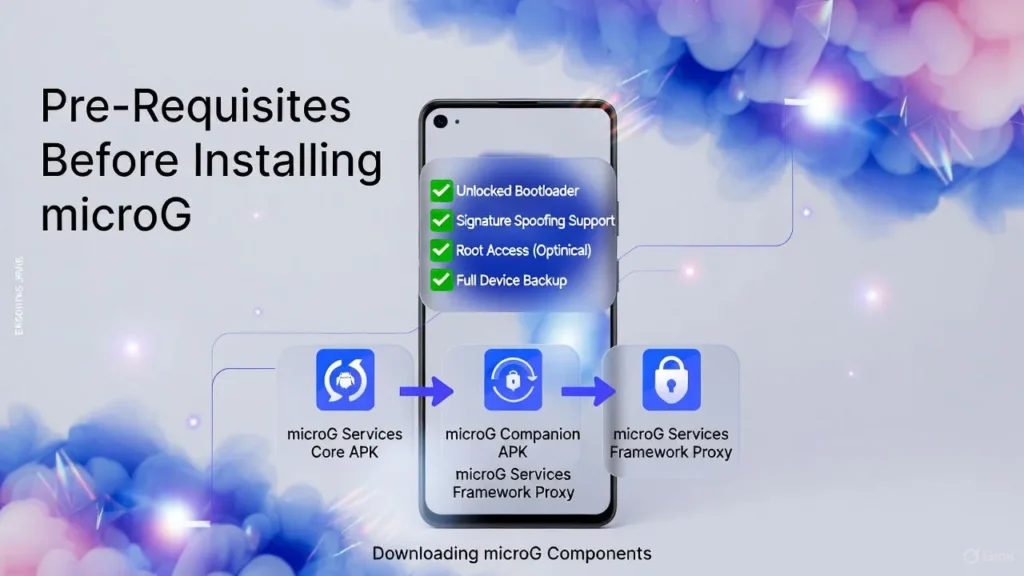
System Requirements: Pre-Installation Checklist for microG
It is important to keep in mind that before installing the app, your device should be ready for it. Ensure it first:
1. Unlocked bootloader: Needed if you’re installing a custom ROM or root access.
2. Signature spoofing support: This feature lets microG mimic Google Play Services.
3. Root access (optional): Required for system-level installations or Magisk modules.
4. Full backup: Your first step is to save all your data first, so you don’t face loss of data later.
If your ROM doesn’t support signature spoofing by default, you can enable it using Magisk or LSPosed modules. This step ensures microG can integrate seamlessly with your Android system.
Secure Acquisition: Downloading the Verified microG Core & Framework
To begin your setup, download the following files for installing microG:
1. microG Services Core APK – which is the main part.
2. microG Companion APK – It helps with installation on your device.
3. microG Services Framework Proxy – It is optional, but widely used for its deeper and faster use.
Always try to download the latest version to stay away from trouble and use it faster and more quickly without any problem.
Installation Protocol: Sideloading microG on Non-Rooted Devices
After those files are downloaded, follow these steps to install microG on your device:
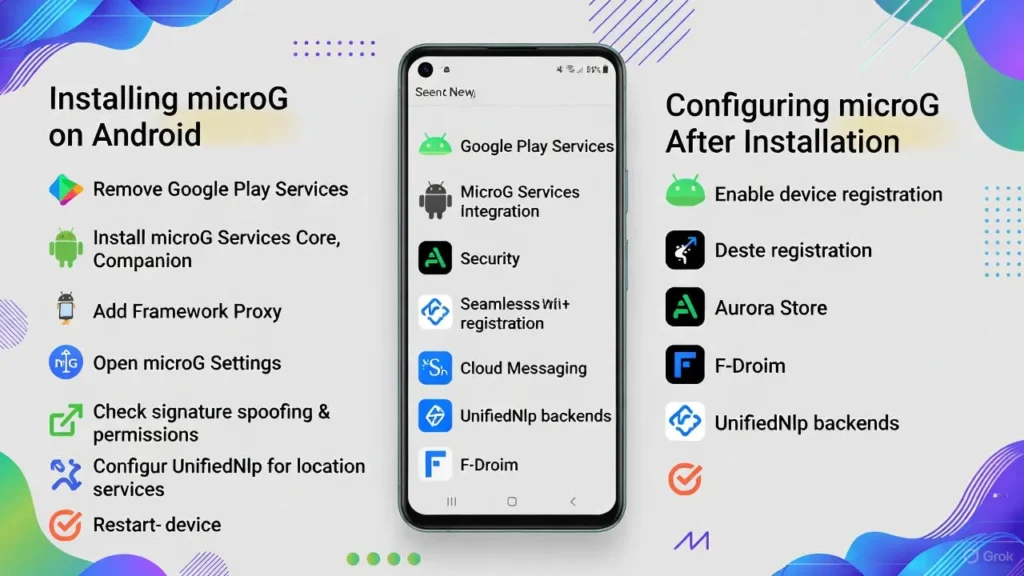
1. Remove Google Play Services. If they are still functionalized in your device to start using its alternative:
2. Install microG Services Core first, followed by microG Companion.
3. Sometimes it is good to get, install the Framework Proxy to enhance system integration, which keeps you away from trouble.
4. After installation is completed, open microG Settings from your app drawer to get the replacer.
5. Check all things yourself, all the options, and verify that all components, signature spoofing, permissions, and Play Services are properly set up.
6. Configure UnifiedNlp to handle your device’s location services.
7. Once you’re done with it, restart your device.
After reboot, microG should be fully functional. Apps before having requirements now they will now run faster and smoother.
Post-Install Setup: Fine-Tuning Permissions & Account Sync
It is important after the installation of any App to get it connected with your device and set up its settings:
• Open microG Settings and enable device registration and Cloud Messaging for app notifications.
• Under Location, enable UnifiedNlp backends such as Mozilla or Nominatim to improve GPS accuracy.
• Make sure permissions for location and background activity are granted.
• Verify all boxes on the Self-Check page are green.
If you prefer an app store without Google, install Aurora Store or F-Droid. These stores are safe, open-source, and compatible with microG.
Troubleshooting Hub: Resolving Signature Spoofing & Sync Errors
It mostly happens that after a successful installation, there are still some minor problems, so let’s discuss them:
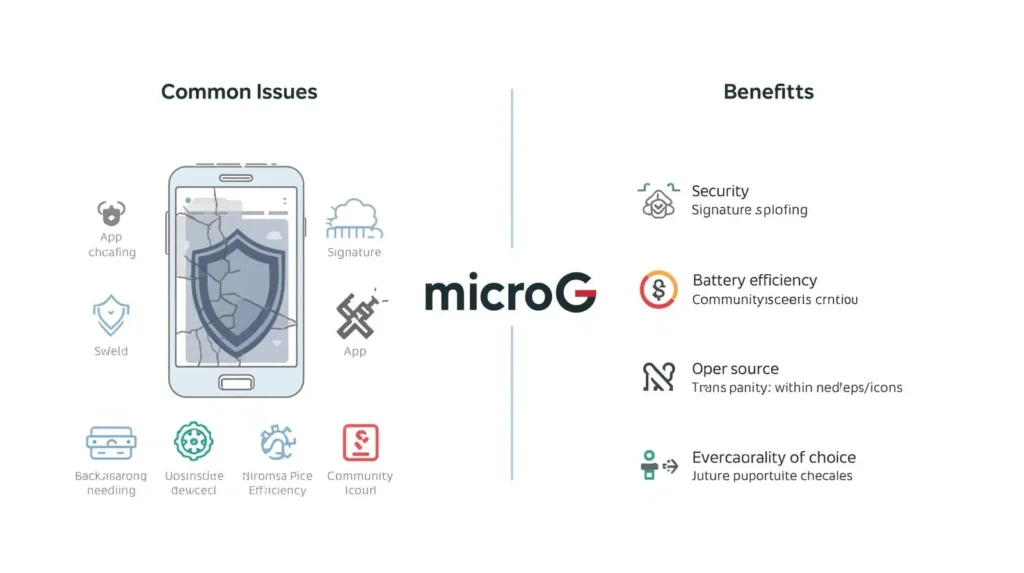
1. Signature spoofing not working: Your ROM might not support it. Use LSPosed or Magisk modules to enable it.
2. If the app doesn’t open: Reinstall the affected apps after installing microG.
3. No push notifications: Enable device registration and Cloud Messaging in settings.
4. Inaccurate location: Install or configure more backends in UnifiedNlp.
5. Self-Check fails: Reinstall MicroG.
Efficiency Analysis: Performance, Privacy, and Resource Management
There are several advantages to shifting yourself:
• Provides more security: microG doesn’t connect to Google’s servers or share your personal data.
• Better Performance: With less power, it runs faster and smoothly.
• Battery Efficiency: When used smoothly, it gives long life to the battery.
• Open-Source Transparency: All microG components are community-driven and fully auditable later.
• App Compatibility: Most apps, depending on Google APIs, continue to work perfectly.
• Freedom of Choice: It is in your control when you want you update it.
If you want to work faster, use microG.
Lifecycle Maintenance: Keeping Your microG Services Current
It keeps your device safe:
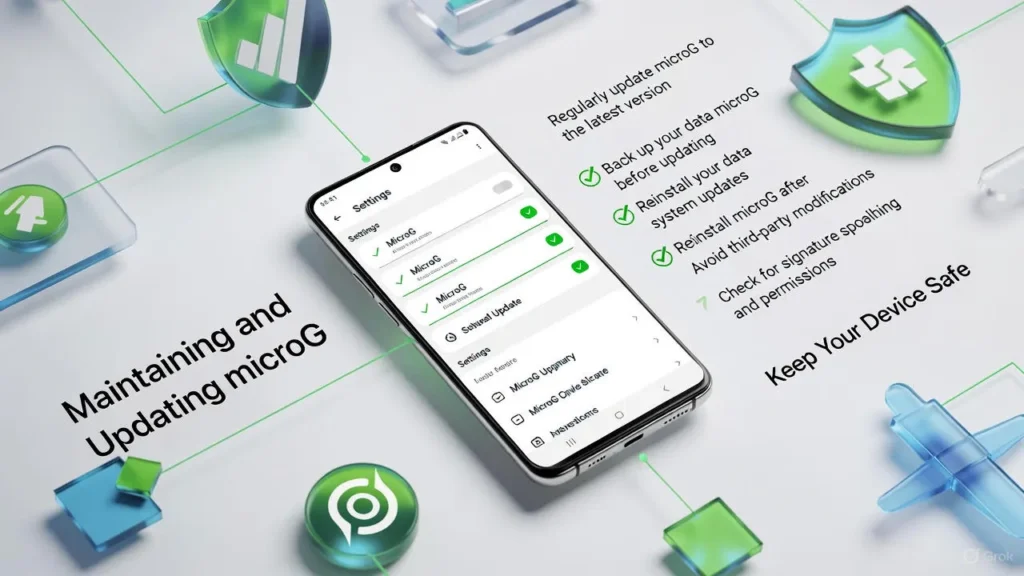
1. Never leave a new update: microG evolves frequently with bug fixes and improvements.
2. Get backup after donning work: It is important to save yourself from doing minor work or new ROMs.
3. Reinstall after system updates: Because it gets settled with it.
4. Avoid third-party modifications: Stick to official releases for best performance.
5. Check it for a new update: Confirm that signature spoofing and permissions remain active.
always keep microG updated.
Final Summary: Achieving Google-Free Freedom in 2026
Once you understand the logic behind MicroG and follow the steps carefully, setting it up is far less complicated than it first appears. This MicroG setup guide gives you a clear path to download, install, and configure it correctly without guesswork or unnecessary trial and error.
The bigger takeaway is control: you now know how to make apps work smoothly without relying on full Google services. If you reached this point, you are already ahead of most users. Take a moment to explore related guides, fine-tune your setup, or share your experience in the comments. With the right knowledge, MicroG becomes a practical tool, not a confusing workaround.